Showing posts with label Nature. Show all posts

Saturday, August 22, 2026

15 Stunning Night Sky Photos (Lunar Eclipse, Perseids, Milky Way)

A partial lunar eclipse hits on 27–28 August 2026, right after Perseids and the mid-August solar eclipse buzz. These 15 licensed night-sky photographs cover eclipses, meteors, the Milky Way, aurora, and dark-sky places people are searching now. Credit sits under each photo.

1. Partial lunar eclipse, March 2026

A recent partial eclipse, Earth’s shadow biting into the Full Moon. This is the look to expect again on 27–28 August.

Partial lunar eclipse March 2026 shadowed Full Moon

Photo: Zhou Guanhuai / Wikimedia Commons / CC0

2. Lunar eclipse over Kuwait, 2017

Orange umbra on a city horizon. Eclipses look different every time; the color comes from sunlight bent through Earth’s atmosphere.

Lunar eclipse orange moon over Kuwait skyline 2017

Photo: Irvin calicut / Wikimedia Commons / CC BY-SA 4.0

3. Full Moon (Pournami)

An unobstructed Full Moon fills the frame. Before any eclipse, this is the baseline people search for moonrise photos.

Bright Full Moon against dark sky Pournami

Photo: Sudora / Wikimedia Commons / CC0

4. Perseid meteor streak

A single Perseid cutting the sky. The shower peaked mid-August; searches stay high through the lunar eclipse weekend.
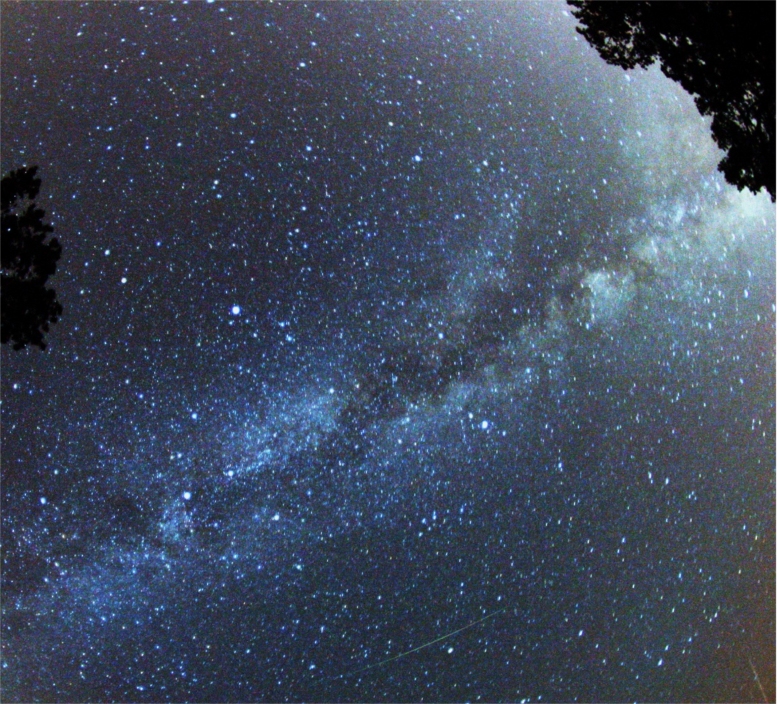
Bright Perseid meteor streak across night sky

Photo: Brocken Inaglory / Wikimedia Commons / CC BY-SA 3.0

5. Aurora and Perseids

Green aurora and a meteor in one frame. Rare overlap, but exactly the combo people typed after the Aug 12 sky events.

Northern lights aurora with Perseid meteor

Photo: Stephan Sprinz / Wikimedia Commons / CC BY 4.0

6. Perseid over Luhasoo bog, Estonia

One Perseid, the Milky Way, and Andromeda above a bog. Dark-sky countryside beats city rooftops for meteor hunting.
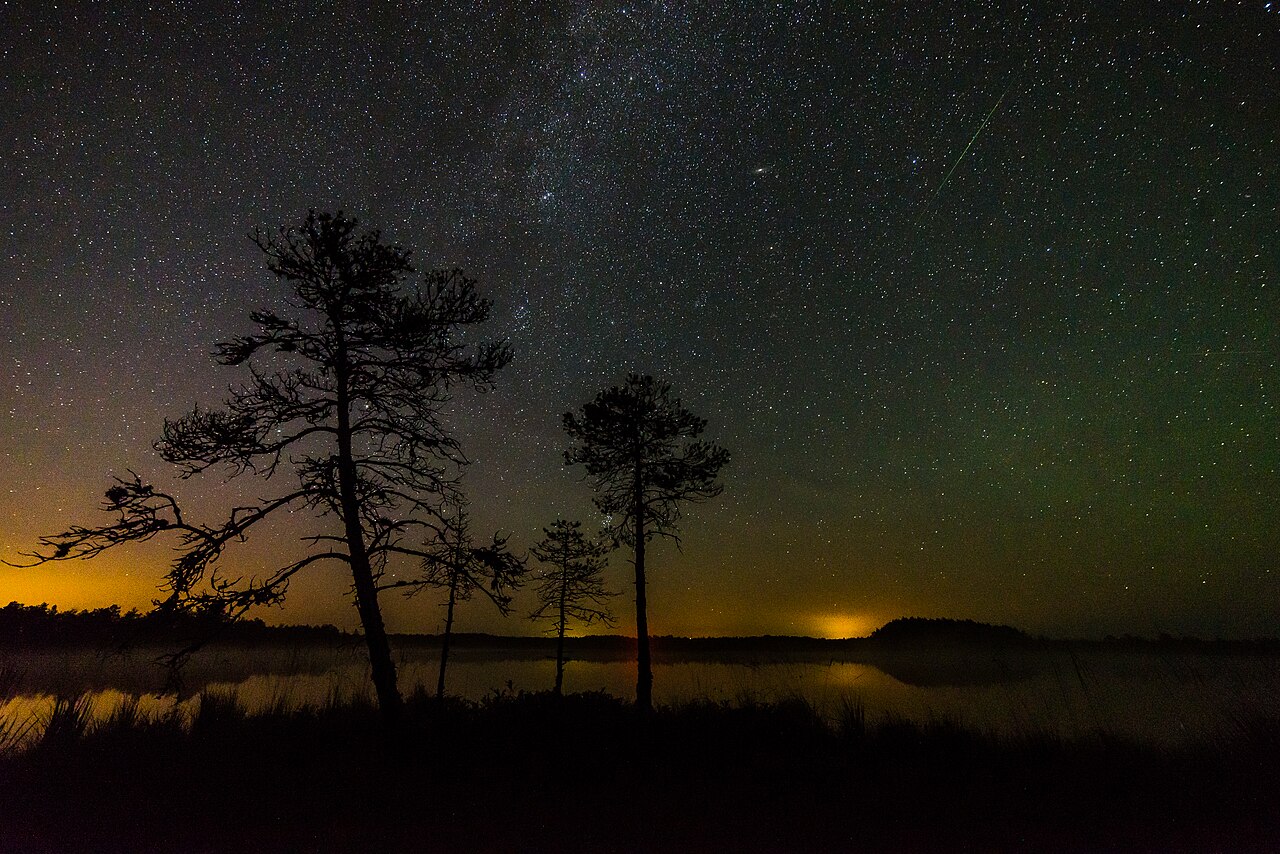
Perseid Milky Way and Andromeda over Luhasoo bog Estonia

Photo: Martin Mark / Wikimedia Commons / CC BY-SA 4.0

7. Milky Way rising, Chile

The galactic center climbing over a dry horizon. ESO’s Paranal skies are why Chile keeps winning dark-sky searches.

Milky Way rising over dark horizon Chile ESO

Photo: Y. Beletsky / ESO / Wikimedia Commons / CC BY 4.0

8. Laser and Milky Way at VLT

A sodium laser guide star punching into the Milky Way. Observatory photos still rank for “night sky photography.”

ESO VLT laser guide star under Milky Way Chile

Photo: ESO / Y. Beletsky / Wikimedia Commons / CC BY 4.0

9. Milky Way over Namib-Naukluft

Sand dunes and the galactic band. One of the darkest parks on Earth, and a staple of dark-sky travel lists.

Milky Way over Namib-Naukluft National Park dunes

Photo: Giles Laurent / Wikimedia Commons / CC BY-SA 4.0

10. Headlands Dark Sky Park, Michigan

A telescope under the Milky Way at a certified International Dark Sky Park. U.S. eclipse travelers still look for spots like this.

Telescope under Milky Way Headlands Dark Sky Park Michigan

Photo: radicalespresso / Wikimedia Commons / Public domain

11. Aurora over Eielson, Alaska

Curtains of green over snow. After Iceland eclipse tourism, aurora searches remain elevated into late August.

Aurora borealis green curtains over Alaska snow

Photo: USAF / Joshua Strang / Wikimedia Commons / Public domain

12. Northern lights over Mývatn, Iceland

Aurora above Iceland’s volcanic lake country. The eclipse path put Iceland in headlines; night photos keep the interest.

Northern lights over Myvatn lake Iceland

Photo: Giles Laurent / Wikimedia Commons / CC BY-SA 4.0

13. Star trails

Long exposures turn Earth’s rotation into circles. A classic technique for eclipse-weekend night shoots when meteors are quiet.

Circular star trail long exposure night sky ESO

Photo: A. Duro / ESO / Wikimedia Commons / CC BY 4.0

14. Andromeda Galaxy

Our nearest major galaxy as a soft oval. Phone cameras barely catch it; this is the deep-sky target people still chase.

Andromeda Galaxy spiral arms deep sky photo 2025

Photo: Brody Wesner / Wikimedia Commons / CC0

15. Orion Nebula

Hubble’s mosaic of the star factory in Orion. Not a backyard snap, but it anchors every “best night sky photos” gallery for a reason.

Orion Nebula Hubble Space Telescope mosaic

Photo: NASA / ESA / M. Robberto / Wikimedia Commons / Public domain

All 15 photos are from Wikimedia Commons. If you republish, keep the photographer credit and license link under each image.

Monday, August 17, 2026

15 Most Spectacular Waterfalls You Can Photograph (Iguazu to Iceland)

Waterfalls are a year-round search: people want the photo, then the trip. These 15 licensed pictures cover Iguazu, Victoria, Iceland, Yosemite, Niagara, and quieter drops that still stop a scroll. Credit sits under each photo.

1. Iguazu Falls, Argentina and Brazil

A whole system of drops, not one curtain. From the air the Iguazu River simply vanishes into mist at the border of two countries.

Aerial view of Iguazu Falls between Argentina and Brazil

Photo: Mariordo / Wikimedia Commons / CC BY-SA 4.0

2. Victoria Falls, Zambia and Zimbabwe

Locally called Mosi-oa-Tunya, the smoke that thunders. In high water the spray becomes its own weather system.

Victoria Falls on the Zambezi River Zambia Zimbabwe

Photo: Diego Delso / Wikimedia Commons / CC BY-SA 4.0

3. Angel Falls, Venezuela

The world's tallest uninterrupted waterfall, dropping off Auyán-tepui in Canaima National Park. The ribbon of water looks impossibly thin until you see the scale of the cliff.

Angel Falls dropping from Auyantepui Venezuela

Photo: Rich Childs / Wikimedia Commons / CC BY 2.0

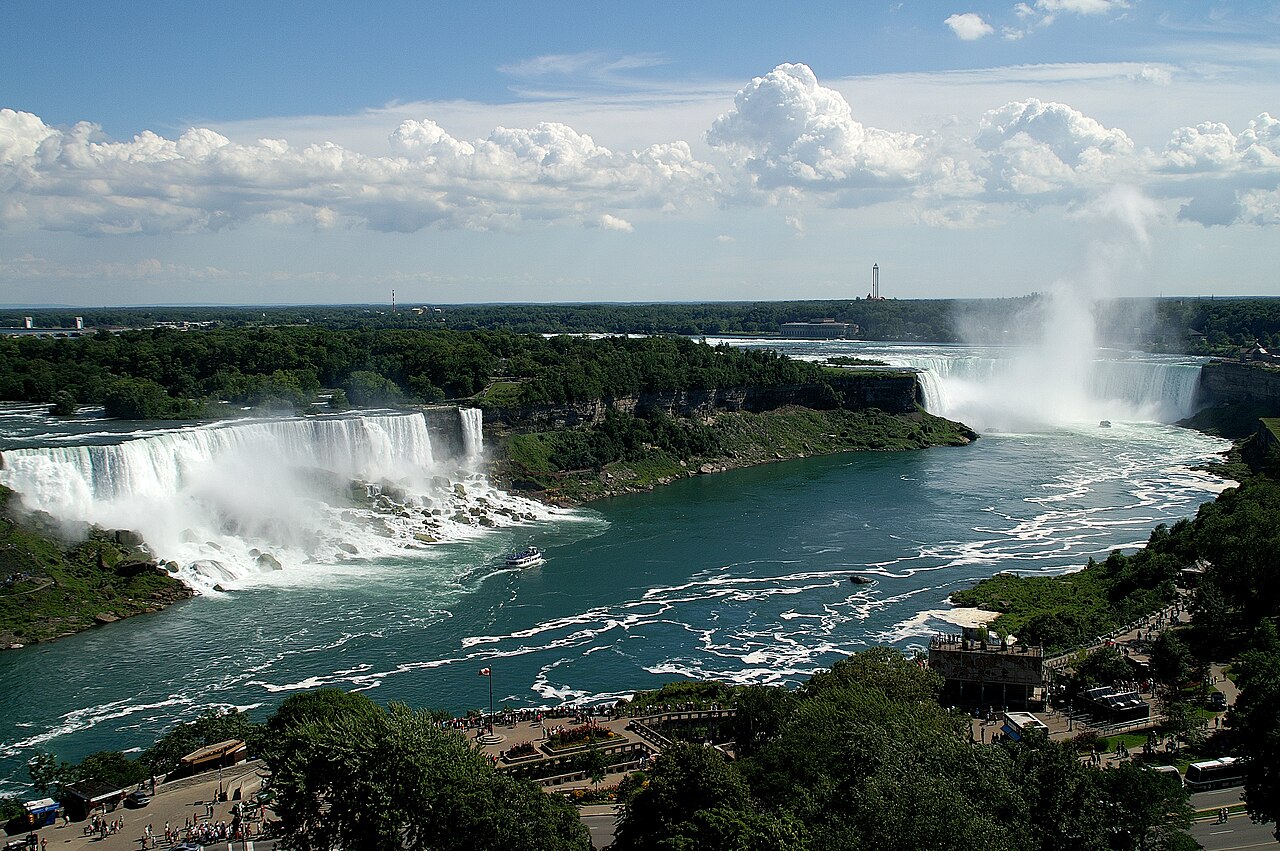
4. Niagara Falls, USA and Canada

Three falls in one view: Horseshoe, American, and Bridal Veil. It is touristy because the geology actually delivers.

Three Niagara Falls seen together USA and Canada

Photo: Saffron Blaze / Wikimedia Commons / CC BY-SA 3.0

5. Yosemite Falls, California

North America's tallest waterfall, in freeze-frame in winter. When the park is white, the drop reads as a chalk line down granite.

Yosemite Falls in winter Yosemite National Park California

Photo: chensiyuan / Wikimedia Commons / CC BY-SA 4.0

6. Skógafoss, Iceland

A 60-meter curtain on Iceland's south coast. You can walk to the basin; the rainbows are not a filter.

Skogafoss waterfall curtain on Icelands south coast

Photo: Hansueli Krapf / Wikimedia Commons / CC BY-SA 3.0

7. Gullfoss, Iceland

The Golden Falls on the Hvítá river. From above, the water turns at a right angle and disappears into a canyon.

Aerial view of Gullfoss waterfall Iceland

Photo: Nickspix / Wikimedia Commons / CC BY-SA 4.0

8. Seljalandsfoss, Iceland

You can walk behind this one. The path is wet, the light comes through the water, and every frame looks like a desktop wallpaper.

Seljalandsfoss waterfall with path behind the water Iceland

Photo: Robert Lukeman / Wikimedia Commons / CC0

9. Plitvice Lakes, Croatia

Not one fall — a chain of turquoise lakes linked by travertine dams. The park is a waterfall system you walk through.

Turquoise lakes and waterfalls in Plitvice Lakes National Park Croatia

Photo: Zysko serhii / Wikimedia Commons / CC BY-SA 4.0

10. Multnomah Falls, Oregon

A two-drop fall in the Columbia River Gorge, with a Benson Bridge that puts people in the shot whether you want them or not. Arrive early.

Multnomah Falls and Benson Bridge Oregon August 2012

Photo: John Fowler / Wikimedia Commons / CC BY 2.0

11. Rhine Falls, Switzerland

Europe's most powerful waterfall near Schaffhausen. Boats go close enough that the rock in the middle becomes a viewing platform in spray.

Rhine Falls near Schaffhausen Switzerland

Photo: Ikiwaner / Wikimedia Commons / CC BY-SA 3.0

12. Kaieteur Falls, Guyana

A single 226-meter drop in the Amazon basin, with almost no crowds. Potaro River water goes over the edge and does not come back in the frame.

Kaieteur Falls on the Potaro River Guyana

Photo: Sorenriise / Wikimedia Commons / CC BY-SA 3.0

13. Havasu Falls, Arizona

Blue-green water on the Havasupai Reservation. The color is mineral, not a preset. Permits are required; the photo is the reward.

Havasu Falls turquoise pool Grand Canyon Arizona

Photo: Gonzo fan2007 / Wikimedia Commons / CC BY-SA 3.0

14. Gocta Falls, Peru

A 771-meter two-drop fall in Amazonas, Peru, unknown to most maps until the 2000s. Cloud forest plus a white streak down the cliff.

Gocta Falls in cloud forest Amazonas Peru 2023

Photo: Draceane / Wikimedia Commons / CC BY-SA 4.0

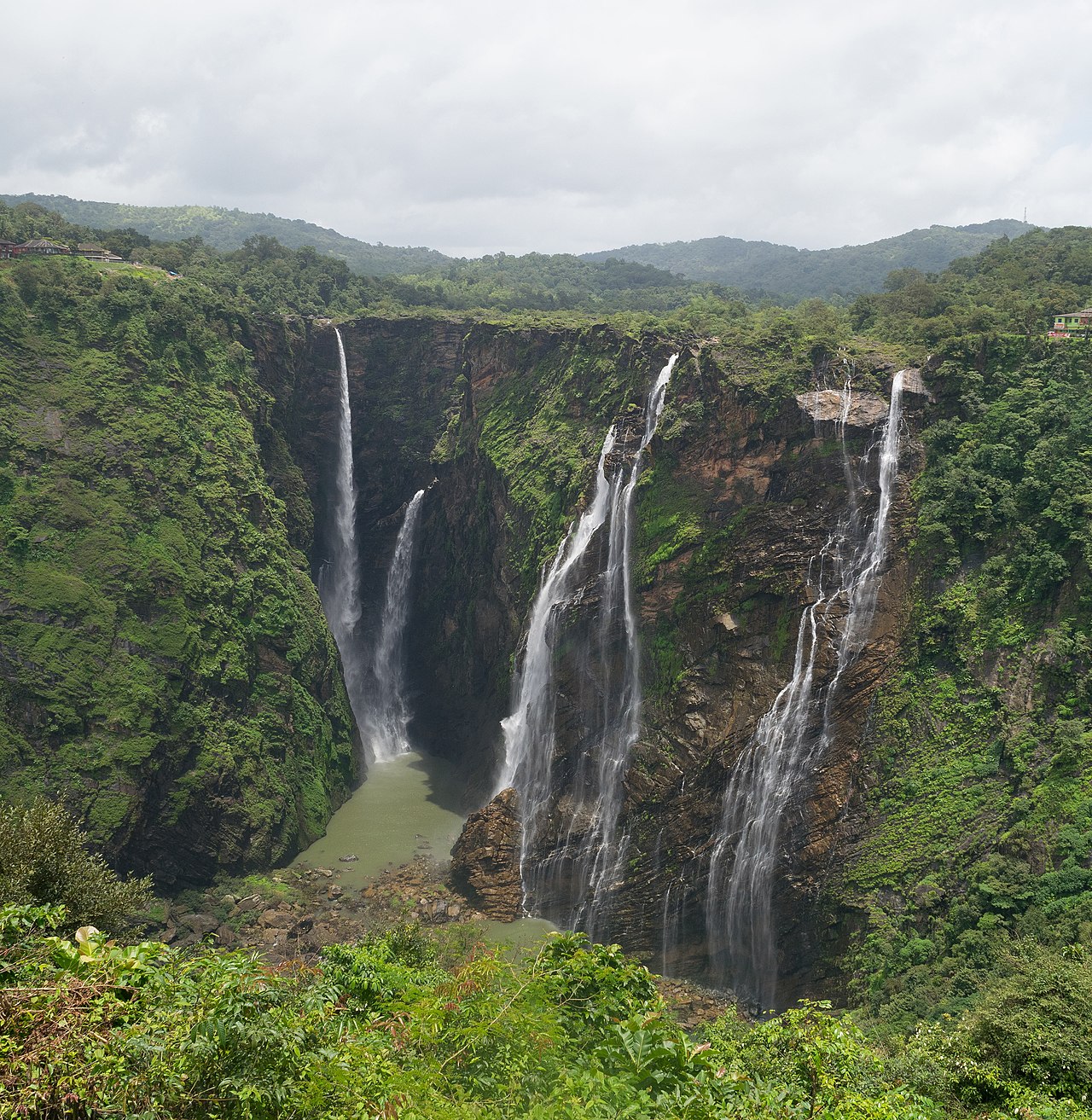
15. Jog Falls, India

Four streams of the Sharavathi in Karnataka, loudest in monsoon. India's tallest plunge waterfall, and still under-photographed outside the region.

Jog Falls four cascades Karnataka India

Photo: Nikhilb239 / Wikimedia Commons / CC BY 3.0

All 15 photos are from Wikimedia Commons. If you republish, keep the photographer credit and license link under each image.

Saturday, August 15, 2026

15 Most Beautiful Hawaiian Island Photos (Kauai, Maui, Oahu, Big Island)

Hawaii is still one of the most-searched tropical destinations on Google. These 15 photographs cover Kauai, Oahu, Maui, and the Big Island — cliffs, volcanoes, black sand, and water so clear it looks edited. Every image is used with a free license. Credit sits under each photo.

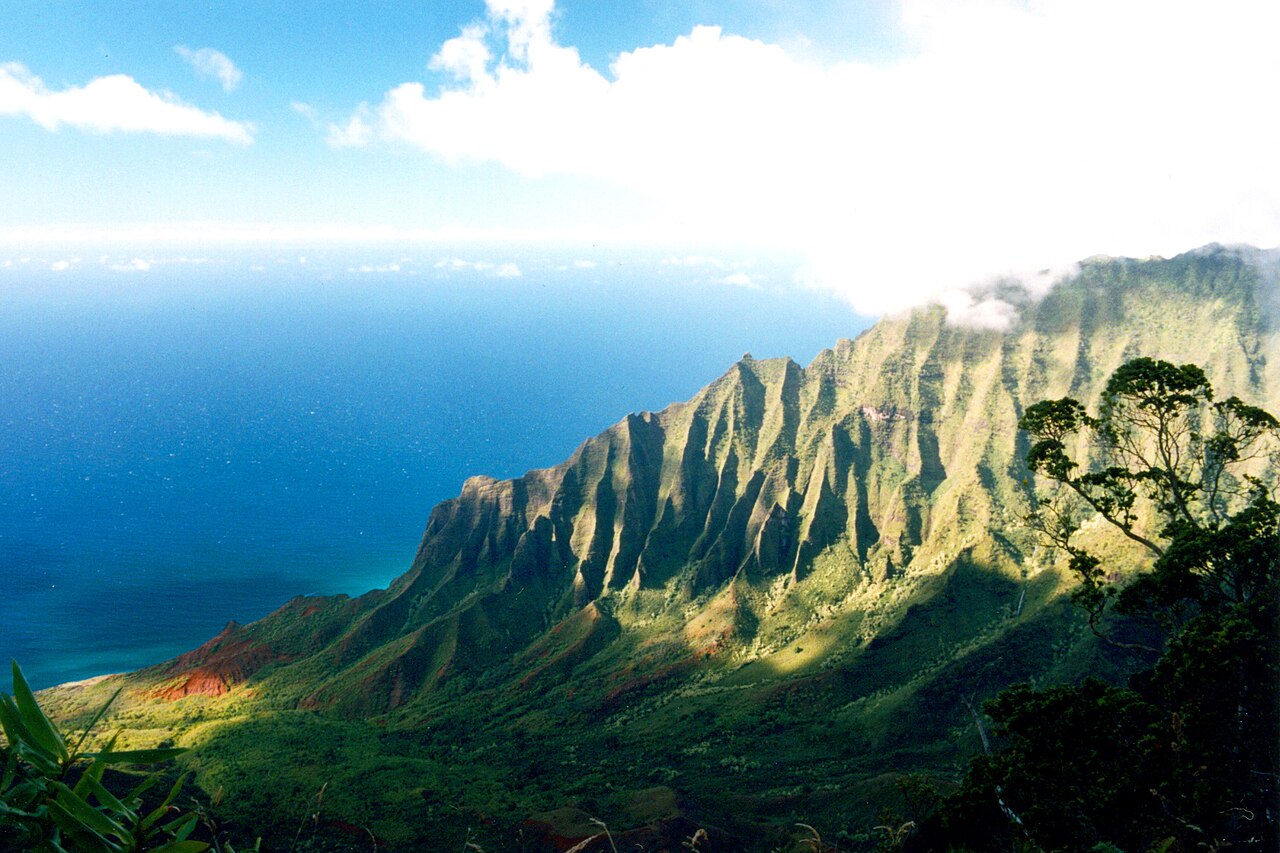
1. Nā Pali Coast, Kauai

Sheer green cliffs drop into the Pacific along Nā Pali Coast State Park. This is the postcard most people picture when they search Hawaiian islands.

Nā Pali Coast cliffs and ocean on Kauai Hawaii

Photo: Jeff Kubina / Wikimedia Commons / CC BY-SA 2.0

2. Waimea Canyon, Kauai

Nicknamed the Grand Canyon of the Pacific, Waimea Canyon cuts more than 3,000 feet through red volcanic rock and rainforest.

Red and green Waimea Canyon State Park on Kauai Hawaii

Photo: dronepicr / Wikimedia Commons / CC BY 2.0

3. Haleakalā Sunrise, Maui

Watching sunrise from the summit of Haleakalā National Park is a Maui ritual. The crater looks like another planet until the light hits it.

Sunrise over Haleakala volcanic crater Maui Hawaii

Photo: Melissa Doroquez / Wikimedia Commons / CC BY-SA 2.0

4. Lanikai Beach, Oahu

Soft sand, turquoise water, and the two Mokulua islets offshore. Lanikai is small, residential, and consistently ranked among America's best beaches.

Lanikai Beach and Mokulua islands Oahu Hawaii

Photo: R. Sullivan / Wikimedia Commons / CC BY-SA 3.0

5. Hanauma Bay, Oahu

A flooded volcanic crater turned nature preserve. The reef is protected, snorkel numbers are capped, and the water stays a sharp blue-green.

Aerial view of Hanauma Bay nature preserve Oahu Hawaii

Photo: Dave Gingrich / Wikimedia Commons / CC BY-SA 2.0

6. Diamond Head, Oahu

Honolulu's volcanic tuff cone is the city's landmark. The short crater hike ends with a view of Waikiki and the south shore.

Diamond Head volcanic cone at sunrise Honolulu Oahu

Photo: Robert Linsdell / Wikimedia Commons / CC BY 2.0

7. Waikiki Beach, Oahu

The most famous beach in Hawaii, with Diamond Head in the frame. Early morning is when the sand is empty enough to actually see it.

Waikiki Beach looking toward Diamond Head Honolulu 2024

Photo: Frank Schulenburg / Wikimedia Commons / CC BY-SA 4.0

8. ʻAkaka Falls, Big Island

A 442-foot waterfall in a rainforest on Hawaii's Hamakua Coast. The loop trail is short; the drop is not.

Akaka Falls waterfall plunging through rainforest Big Island Hawaii

Photo: HonomuGoatGuy / Wikimedia Commons / CC BY-SA 4.0

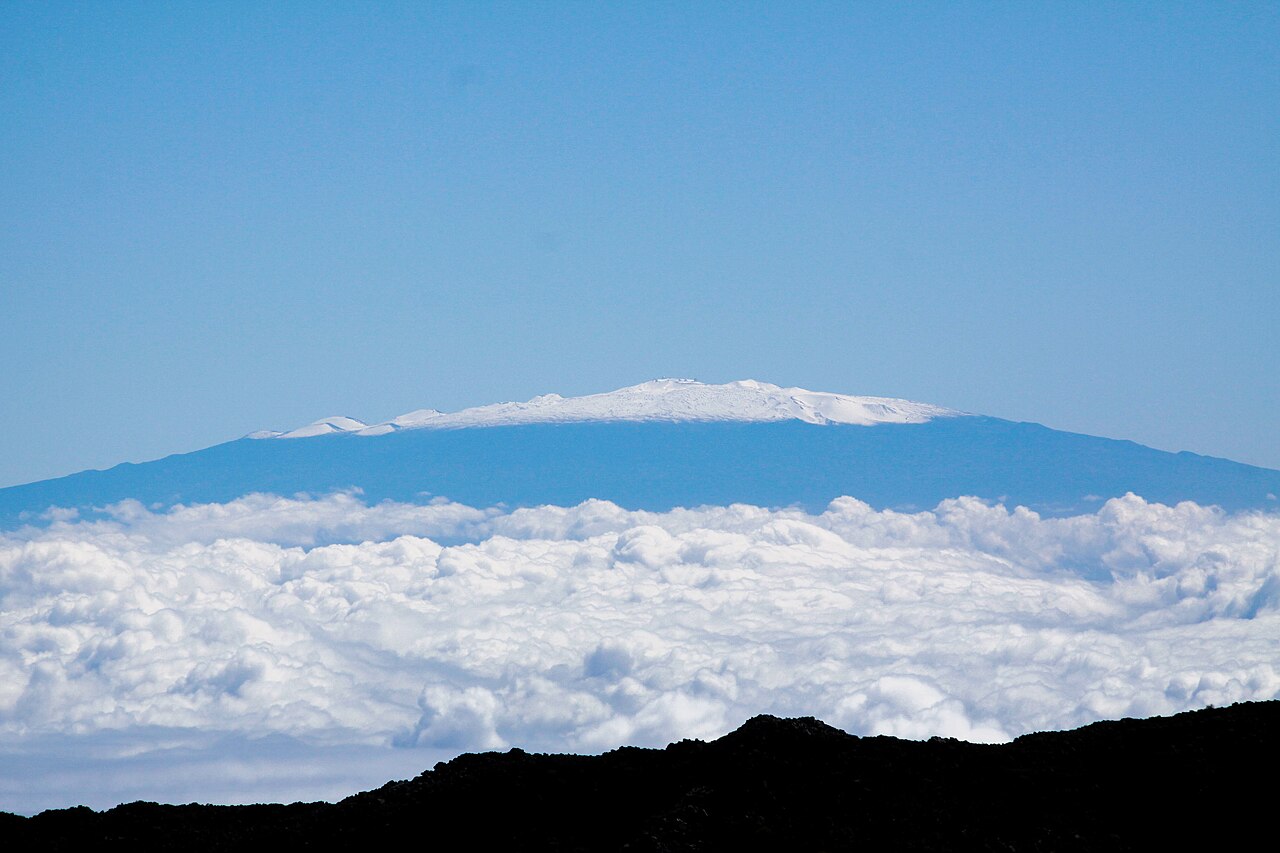
9. Mauna Kea, Big Island

The highest point in Hawaii, often snow-capped in winter. Observatories sit on the summit above the clouds.

Snow on Mauna Kea seen from Haleakala Maui Hawaii

Photo: Aiden Relkoff / Wikimedia Commons / CC BY-SA 4.0

10. Molokini Crater, Maui

A crescent-shaped islet off Maui and one of the state's best snorkel sites. The crater wall shelters calm, clear water.

Crescent-shaped Molokini crater islet off Maui Hawaii

Photo: Collin Grady / Wikimedia Commons / CC BY-SA 2.0

11. Pololū Valley, Big Island

Black sand, steep walls, and a lookout at the end of Highway 270. Pololū feels older and quieter than the resort coast.

Pololu Valley lookout north shore Big Island Hawaii

Photo: Mickaw2 / Wikimedia Commons / Public domain

12. Waipiʻo Valley, Big Island

A deep valley of taro fields and a river mouth beach, seen from the Kukuihaele lookout. Access to the valley floor is restricted for a reason.

Waipio Valley seen from the lookout Hawaii Island

Photo: Famartin / Wikimedia Commons / CC BY-SA 4.0

13. Hanalei Bay, Kauai

A wide crescent on Kauai's north shore, mountains behind, rain sometimes moving in over the water. Surf in winter, glass in summer.

Rain approaching Hanalei Bay Kauai Hawaii

Photo: tdlucas5000 / Wikimedia Commons / CC BY 2.0

14. Kīlauea Lava, Big Island

Pahoehoe lava from Kīlauea is why Hawaii Island is still growing. When the volcano is active, this is one of the few places on Earth you can watch land form.

Aerial pahoehoe lava flow at Kilauea Hawaii Volcanoes National Park

Photo: Brocken Inaglory / Wikimedia Commons / CC BY-SA 3.0

15. Punaluʻu Black Sand Beach, Big Island

Volcanic sand, coconut palms, and green sea turtles that haul out to rest. Stay back from the turtles — the photo still works from the path.

Punaluu black sand beach coconut palms Big Island Hawaii

Photo: Diego Delso / Wikimedia Commons / CC BY-SA 3.0

All 15 photos are from Wikimedia Commons. If you republish, keep the photographer credit and license link under each image.

Friday, November 7, 2014

Seattle, Washington from the Space Needle - Detail


Seattle, Washington from the Space Needle - Detail (its even better than Google Maps)

Tree of Life

This six-minute Tree of Life video appeared on the BBC One programme ‘Charles Darwin and the Tree of Life’ narrated by David Attenborough.

Friday, October 14, 2011

Effect of Deforestation is bathroom problem

Effects of Deforestation creates huge bathroom problem for your favorite pets

Saturday, April 30, 2011

Most Beautiful Nebulas of Universe

More than one nebula are called nebulae. Nebulae are the basic building blocks of the universe. They contain the elements from which stars and solar systems are built. They are also among the most beautiful objects in the universe, glowing with rich colors and swirls of light. Stars inside these clouds of gas cause them to glow with beautiful reds, blues, and greens. These colors are the result of different elements within the nebula. Most nebulae are composed of about 90% hydrogen, 10% helium, and 0.1% heavy elements such as carbon, nitrogen, magnesium, potassium, calcium, iron.

A nebula is an interstellar cloud of dust, hydrogen gas, helium gas and other ionized gases. Originally, nebula was a general name for any extended astronomical object, including galaxies beyond the Milky Way. 

These clouds of matter are also quite large. In fact, they are among the largest objects in the galaxy. Many of them are dozens or even hundreds of light-years across. Nebulae have been divided into five major categories. These are emission nebulae, reflection nebulae, dark nebulae, planetary nebulae, and supernova remnants. Emission and reflection nebulae tend to be fuzzy in appearance and lack any noticeable shape or structure. They are also known as diffuse nebulae.

Trifid Nebula


Horse Head Nebula


Helix Nebula


Cone Nebula


Eagle Nebula


Cat's Eye Nebula


Carina Nebula


Peony Nebula


Swan Nebula


Lagoon Nebula


Crab Nebula


Butterfly Nebula


Orion Nebula


Eskimo Nebula


Rosette Nebula


Reflection Nebula


Witch Head Nebula


Hourglass Nebula


Tarantula Nebula


Ant Nebula


Boomarang Nebula


California Nebula


Cat's Paw Nebula


Heart Nebula


Jellyfish Nebula


Flaming Star Nebula


Prawn Nebula


Cocoon Nebula


Dumbell Nebula


Iris Nebula


Fetus Nebula


Crescent Nebula


Little Ghost Nebula


Medusa Nebula


Snake Nebula


Rotten Egg Nebula


Pacman Nebula


Spirograph Nebula


Witch's Broom Nebula


The Wizard Nebula